

The science behind T-Booster
The thymus can recover.That insight inspiredT-Booster.
We studied the thymus’s natural recovery biology and asked whether daily nutrition could support thymus function and new T-cell output as we age.
01 · Why we began
COVID-19 revealed whythe thymus mattered.
Older adults faced a much higher risk from COVID-19 than younger people. That contrast directed our attention towards immune ageing and the organ that helps produce new T cells.
A dynamic organ
01Pressure
02Temporary shrinkage
03Recovery
Stress, infections, pregnancy and some cancer treatments can temporarily shrink the thymus. When the pressure passes, natural repair can begin.
Age revealed the challenge
COVID-19 outcomes showed how strongly age can affect the body’s ability to respond to a new threat.
The thymus became the focus
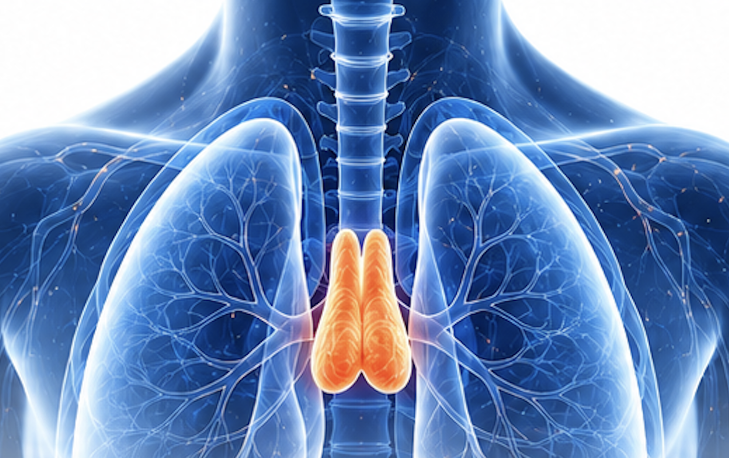
The thymus helps produce new T cells. Its activity is generally stronger when we are young and declines as we age.
Recovery provided the clue
After temporary shrinkage, the thymus can activate natural repair processes when the pressure has passed.
The biology shaped T-Booster
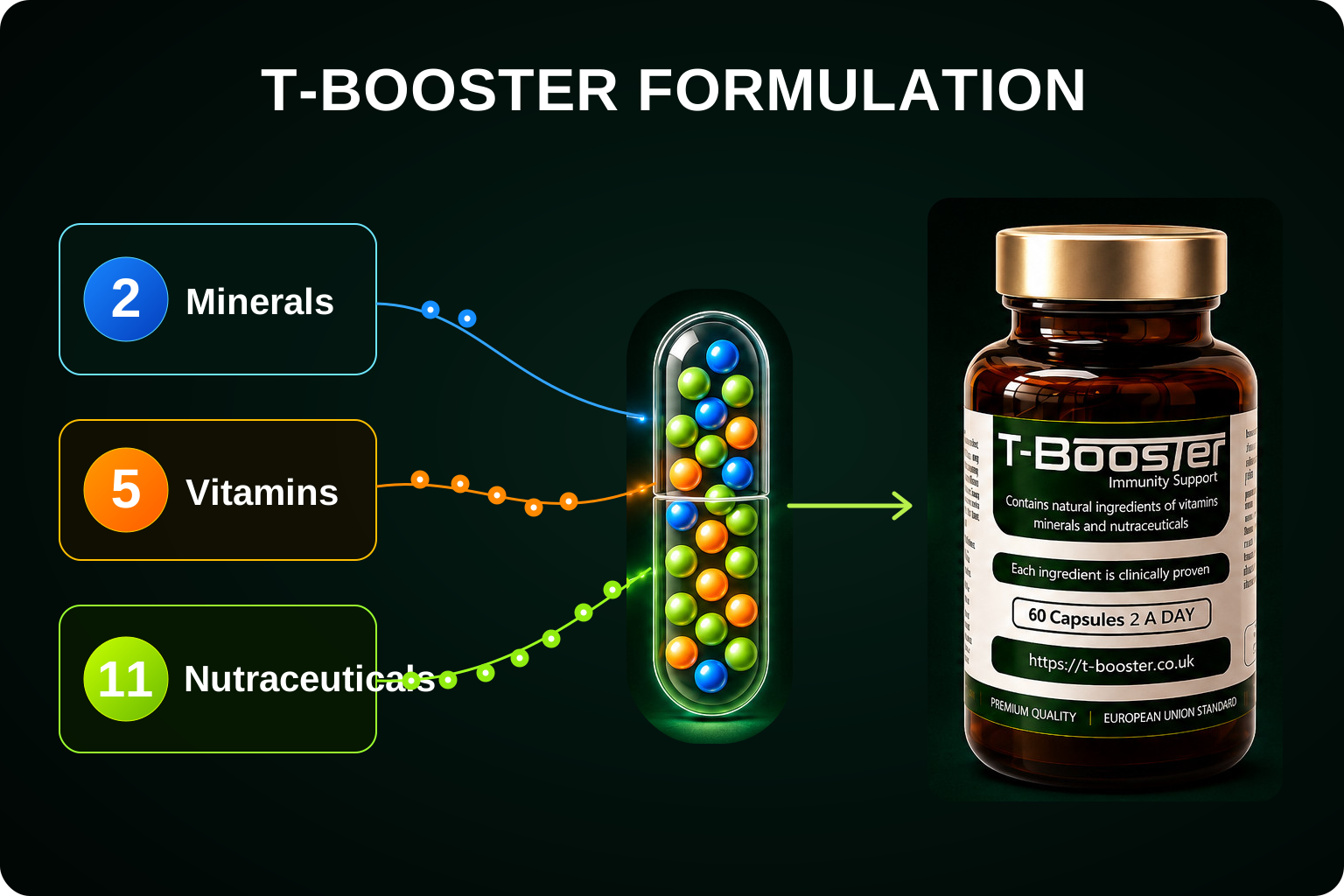
We studied those recovery pathways and natural compounds that may support them, leading to an 18-ingredient daily formulation.
Scientific basis and original papers
Age-specific mortality and immunity patterns of SARS-CoV-2Nature, 2021 · O’Driscoll and colleaguesOpen paper ↗
Endogenous thymic regeneration: restoring T cell production following injuryNature Reviews Immunology, 2025 · Granadier, Acenas and DudakovOpen paper ↗
Clinical and radiologic review of the normal and abnormal thymus: pearls and pitfallsRadiographics, 2010Open paper ↗
Murine pregnancy leads to reduced proliferation of maternal thymocytes and decreased thymic emigrationImmunology, 2007Open paper ↗
Molecular control over thymic involution: from cytokines and microRNA to aging and adipose tissueEuropean Journal of Immunology, 2012Open paper ↗
These papers support the biological rationale for studying immune ageing, thymic involution and thymic recovery. They do not by themselves establish a product-specific clinical effect; conclusions about T-Booster depend on the completed human-data analysis.
02 · What the thymus does
The thymus trains T cellsfor flexible immunity.
Inside the thymus, immature immune cells are trained, tested and selected. The cells that succeed leave as mature T cells, helping the body maintain a broad and flexible immune repertoire.
A training ground for new T cells
Immature cells arrive from the bone marrow and receive a carefully ordered sequence of biological signals.
Useful cells are retained, unsuitable or self-reactive cells are removed, and the successful cells enter circulation prepared to recognise unfamiliar infections and abnormal cells.
- 01
Training
Signals guide immature cells towards functional T-cell identities.
- 02
Selection
The thymus removes unsuitable cells and retains useful responders.
- 03
Diversity
The resulting repertoire gives the immune system more ways to recognise unfamiliar threats.
See the biology in motion
Watch how the thymus trains new T cells.
The animation follows immature cells as they arrive, train and are selected inside the thymus. The selected cells leave the thymus, enter the bloodstream and travel through the body as mature T cells.

03 · A dynamic organ
The thymus changeswith age and stress.
The thymus gradually becomes less active with age. It can also contract temporarily under pressures such as infection, severe stress, pregnancy and some cancer treatments, before recovering when that pressure passes.

- 01
Early life
High thymic activity supports a broad supply of newly generated T cells.
- 02
Across adulthood
Natural thymic involution gradually reduces the rate of new T-cell production.
- 03
Under biological pressure
Temporary shrinkage can occur during infection, stress, pregnancy and some treatments—and recovery may follow when that pressure resolves.
04 · From question to formulation
Research shaped an18-ingredient formulation.
The aim was not to choose one fashionable ingredient. Over four years of R&D, 13 researchers and specialists reviewed the biology, available human evidence, ingredient compatibility, practical dosing and UK GMP manufacturing.
- 01Begin with thymus biology and healthy immune ageing
- 02Select complementary minerals, vitamins and nutraceuticals
- 03Review dose, compatibility, safety and manufacturing practicality
- 04Move from a biological proposal to outcomes that can be measured in people
05 · Turning the idea into evidence
A biological idea matterswhen it can be measured.
The programme was designed to look beyond personal impressions. It combines a molecular marker, wider blood context, participant experience and a blinded placebo comparison.
- 01Molecular marker
TREC DNA
A marker associated with newly generated T cells provides biological context for thymic output.
- 02Blood context
CBC and lymphocytes
Wider blood measures help place the principal biological findings in context.
- 03Participant experience
18-question questionnaire
Volunteers recorded everyday health concerns at baseline and again during the programme.
- 04Study design
Blinded placebo comparison
The randomised, double-blind, placebo-controlled programme involved 260 adults.
06 · Where the programme stands
Full data will answerthe biology question.
The rationale is defined, the formulation has been developed, and human participation is complete. Laboratory analysis and statistical interpretation will determine what the programme can responsibly conclude.
- 01
Research question defined
The programme connects thymus function, newly generated T cells and healthy immune ageing.
- 02
Natural formulation developed
Eighteen selected ingredients were developed through a UK GMP manufacturing route.
- 03
Human participation completed
The randomised, double-blind, placebo-controlled programme involved 260 adults over 12 months.